


Fall is a good season for books that ask us to slow down and reconsider the stories we think we already know. These three titles—Colin Kaepernick’s The Perilous Fight, Jamilah Lemieux’s Black. Single. Mother., and Duane “Keffe D” Davis and Yusuf Jah’s Compton Street Legend—could hardly look more different on the shelf. One is an athlete’s memoir, one is a meditation on Black motherhood and family, and one is a street memoir rooted in the history of hip-hop. Yet all three are ultimately concerned with something similar: who gets to tell the story of Black life, and what happens when people refuse to let institutions, stereotypes, or outsiders tell it for them.
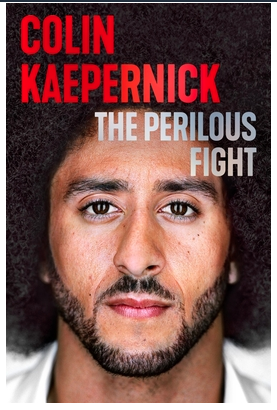
The Perilous Fight — Colin Kaepernick
Kaepernick’s memoir looks backward from the defining act of his public life: his decision to protest during the national anthem in 2016. But the book is less a single-issue account than an attempt to explain how that moment emerged from years of racial identity, family life, sports, reading, and encounters with institutions that taught him where power lived. Raised by white adoptive parents in Turlock, California, Kaepernick describes learning to navigate Blackness in environments where he often felt conspicuous or misunderstood. Football eventually gave him a place where his ability could not easily be disputed. The memoir then follows the transformation of athlete into activist, including his confrontation with the NFL and the personal consequences of becoming a national symbol. The interesting tension is between the public Kaepernick, the image everyone recognizes, and the private person trying to explain the experiences behind that image.
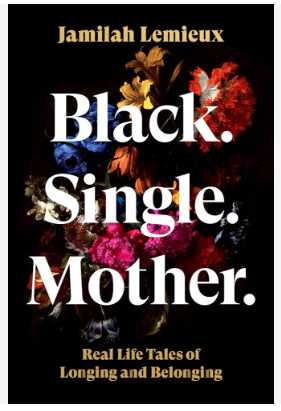
Black. Single. Mother. — Jamilah Lemieux
Lemieux approaches identity from a different angle: motherhood. Part memoir, part cultural history, and part collection of testimony, the book examines what it means to raise children as a Black single mother in a society that has often treated that identity as evidence of failure. The lovely Howard University alum, personality and writer draws on her own experience growing up with a single mother and eventually becoming one herself, while incorporating the voices of 21 other Black single mothers. What gives the book its depth is its refusal to reduce motherhood to either tragedy or triumph. Lemieux writes about love, sex, ambition, co-parenting, loneliness, friendship, and the desire to remain a whole person outside the role of “mother.” The book becomes an argument for complexity: a family does not have to resemble a conventional American ideal to be loving, functional, or worthy.
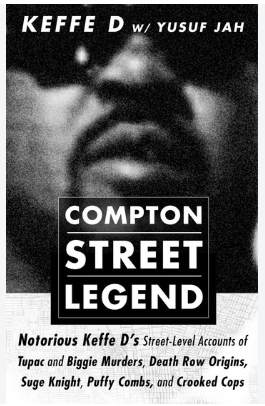
Compton Street Legend — Duane “Keffe D” Davis and Yusuf Jah
Compton Street Legend moves into the world of gang culture, Death Row Records, and the mythology surrounding the assassination of Tupac Shakur and the East Coast–West Coast rap beef era. Davis presents the book as a street-level account of his life and of the people and conflicts surrounding that world, including his account of the Las Vegas confrontation that preceded Tupac’s death. The book is particularly interested in codes of loyalty, family, brotherhood, betrayal, and the consequences of violating those codes. That makes the book more than a typical tell-all. Its central question is about competing systems of authority: the rules of the street, the entertainment industry, law enforcement, and the personal codes people construct when they believe conventional institutions cannot be trusted.
Where the Three Books Meet
Taken together, these books form an unexpectedly coherent conversation about self-definition. Kaepernick asks what happens when an athlete refuses the role society has assigned him. Lemieux asks what happens when a mother refuses the stereotypes attached to her family. Davis presents a world in which reputation, loyalty, and survival are governed by codes outside conventional institutions. All three are interested in the distance between a person’s lived reality and the story the public tells about that person. That makes this an especially compelling fall reading list: three very different voices, all wrestling with identity, power, family, loyalty, and the question of who gets to write the first draft of a life.
Nikki Mack, Editor In Chief
 DaChickenShack