

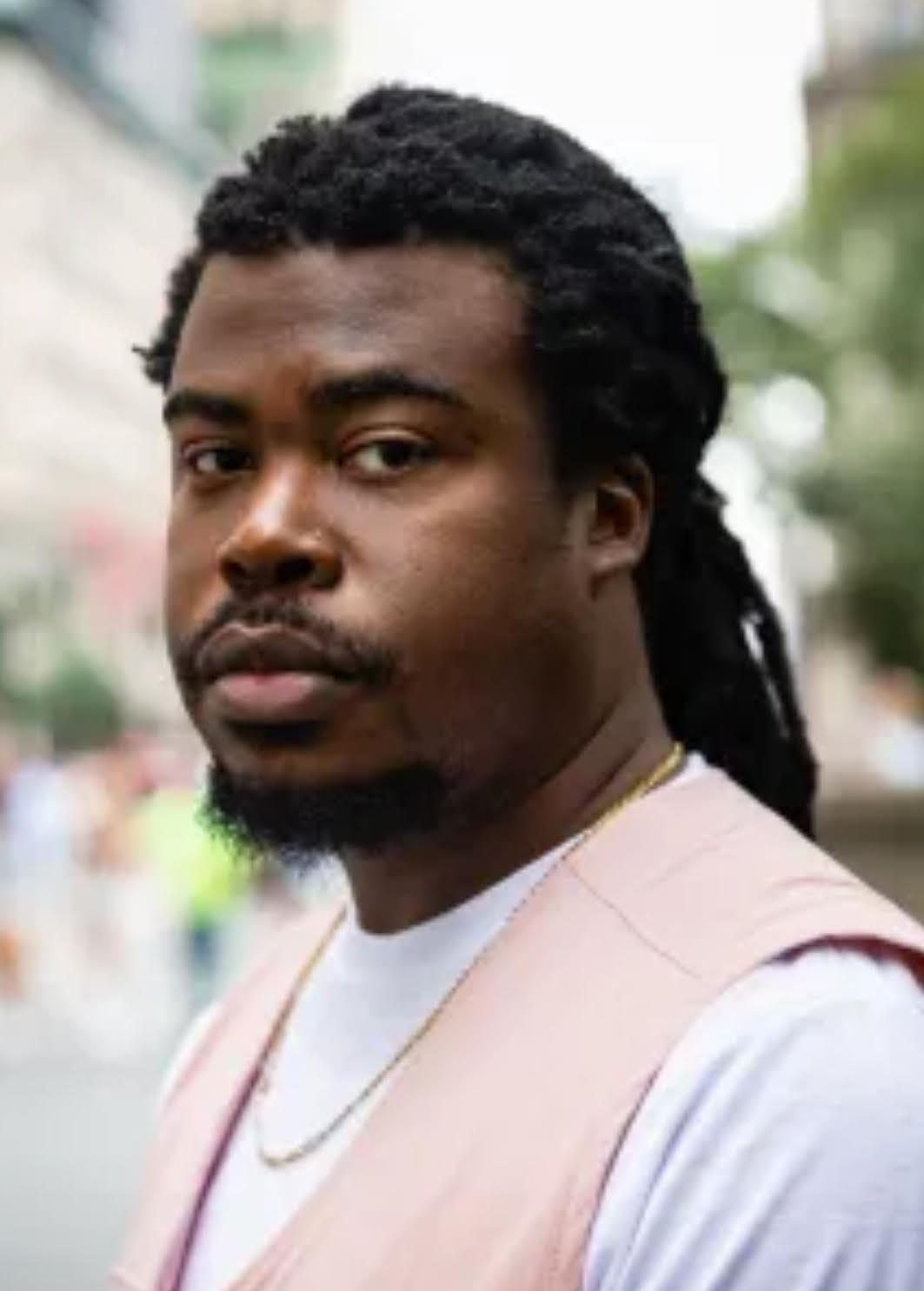
There’s a rhythm to Andre J. Gee’s writing that feels less like reportage and more like translation—an attempt to carry the pulse of a culture into words before it gets distorted by algorithms and noise. In an era where too many stories about rap are packaged for clicks, Gee remains committed to something rarer: honesty.
Hip-hop has always been a battleground between spectacle and truth. What began in parks and basements as a grassroots act of storytelling has grown into a trillion-dollar industry—and with that expansion came the temptation to flatten it into scandal, gossip, and outrage. Gee resists. His work, whether at Rolling Stone or Uproxx, or being highlighted by the Los Angeles and New York Press Clubs respectively, reads like a corrective: a reminder that hip hop deserves not just attention but care.

Raised in Washington, D.C. (a hot bed of culture from Mumbo Sauce to Go Go Music), and now rooted in the sacred hip hop ground of Brooklyn, Gee carries with him both the curiosity of an avid fan and the discipline of an archivist. He listens closely—to artists, to the streets, to the silences between what is said and what is sold. When he profiles a rapper or unpacks an album, he refuses to reduce the art to trend lines or moral panic. Instead, he lingers in the contradictions: the tension between survival and commerce, braggadocio and vulnerability, joy and heartbreak.
That balance has earned him respect not just from readers but from those who understand the stakes of cultural memory. In 2025, CookeMcDermid, a literary agency known for representing bold nonfiction voices, announced they would be working with Gee. They praised his ability to probe the darker corners of the industry while still honoring its brilliance. It was confirmation of what his readers already knew—that his work is less about chasing the moment and more about preserving it.
And that preservation matters. Hip-hop just turned 50, a milestone that asked hard questions about who will document its next half-century. Many have chosen speed over depth, spectacle over story. Gee is one of the few reminding us that journalism, at its best, is an act of love. Love for the art, love for the people making it, love for the truth, even when it’s uncomfortable.
There’s a quiet bravery in that. In a landscape crowded with sideshow acts and unscrupulous players, Andre J. Gee’s insistence on writing with clarity and conscience feels almost radical. He reminds us that the culture deserves caretakers as much as it deserves critics. And he writes as if the future of hip-hop memory depends on it—because, in many ways, it does.
You can read his daily thoughts @andrejgee on social media, his Sub Stack or catch him chronicling culture at music industry trade mag Rolling Stone. The possibilities of what he may pull off in the long form space are endless. Onward and upward.
Nikki Mack, Editor In Chief
 DaChickenShack