

A research-based look into how music saves—or sabotages—your health.
1. Introduction
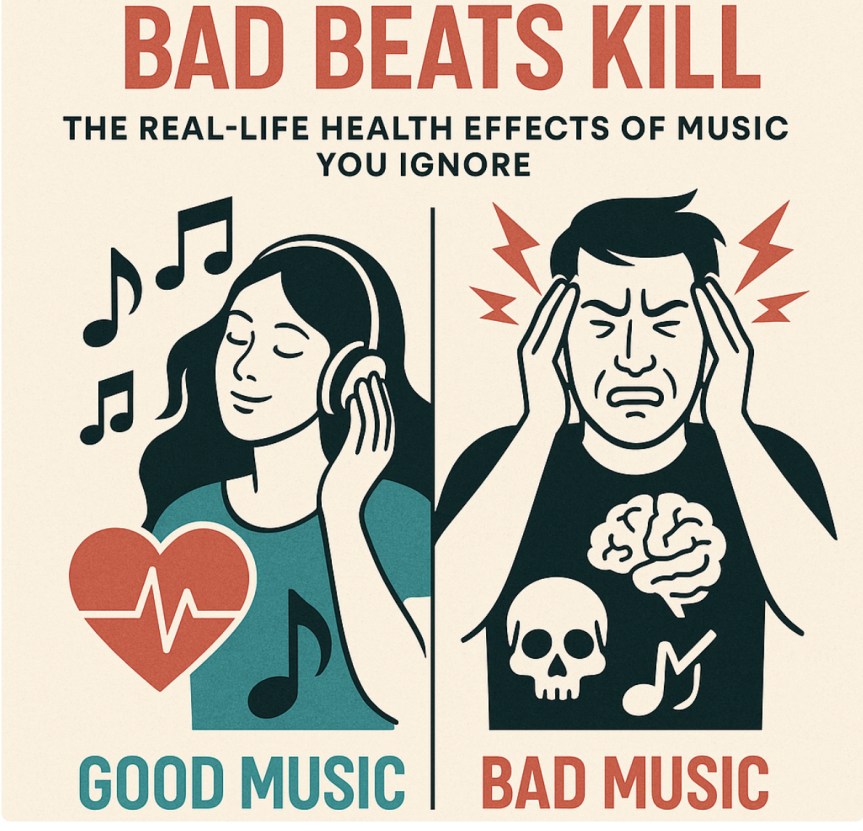
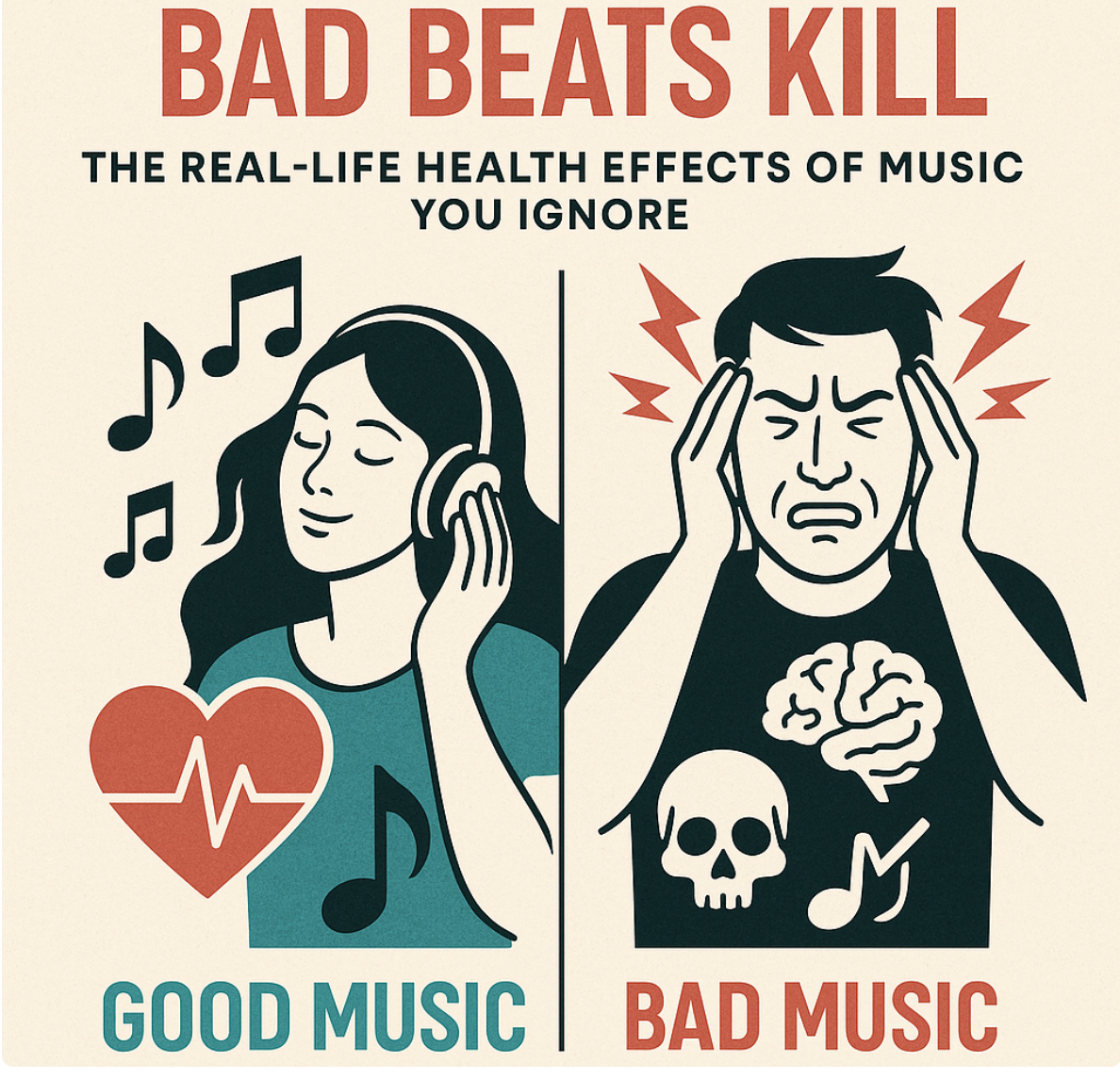
Music is a uniquely powerful human stimulus—capable of invigorating, comforting, or, under certain conditions, injuring its listener. This white paper deepens previously proposed conclusions, presenting robust scientific evidence that bad music—defined here as loud, unpleasant, or non‑preferred sound—can contribute to serious, even life‑threatening health conditions, while good music, especially in therapeutic or self-selected contexts, can promote substantial physical and mental healing.
2. Defining “Bad” Music as a Health Risk
2.1 Environmental Noise as a Comparator
“Bad music” shares characteristics with environmental noise pollution: unpredictable, unwanted, and non-musical sound exposure. Traffic, rail, and aircraft noise has been rigorously linked to health outcomes such as hypertension, cardiovascular disease, stroke, cognitive decline, and metabolic disorders. Meta-analyses report each 10 dB rise in traffic noise above ~50 dB increases coronary heart disease risk by about 8 % Wikipedia+4PMC+4Wikipedia+4.
The European Environment Agency estimates 12,000 premature deaths and 48,000 new ischemic heart disease cases per year in the EU are attributable to traffic noise European Environment Agency+1PMC+1. The WHO attributes ~61,000 years of healthy life lost annually in Western Europe to noise-induced cardiovascular conditions aloneAmerican Heart Association Journals+2PMC+2PMC+2.
2.2 Physiological Mechanisms: Stress, Sleep, Oxidation
Chronic exposure to environmental noise triggers activation of the sympathetic nervous system, elevating stress hormones (e.g., cortisol, adrenaline), and causing endothelial dysfunction, oxidative stress, and elevated blood pressure—even during sleep New York Post+15Pfizer+15European Environment Agency+15. Animal models demonstrate that aircraft noise exposure elevates vascular oxidative markers and impairs arterial function; endothelial dysfunction could be reversed by antioxidant vitamin C, underscoring oxidative stress as causal PubMed.
Disruptions to sleep architecture are central: noise exposure at night causes frequent arousals, poorer restorative sleep, higher blood pressure, and worsened metabolic profiles .
2.3 Community-Level Evidence
A large UCL study showed residents exposed to aircraft noise (>50 dB daytime, >45 dB night) had stiffer, thicker heart muscles, doubling or quadrupling risk of heart attack, arrhythmia, or stroke American Heart Association Journals+9Pfizer+9New York Post+9.
In New Jersey, chronic exposure (>65 dB) correlated with a 72 % higher heart attack rate, accounting for ~5 % of all cases statewide American College of Cardiology. European studies similarly show that nighttime noise exposure increases major adverse cardiovascular events by ~25 % per 10 dB increment, independent of pollution or socioeconomics European Society of Cardiology+1PMC+1.
2.4 Impacts of “Bad” Music Specifically
Though fewer studies focus on music versus noise, the mechanisms parallel: unpleasant, nonpreferred, or overly loud music can elevate stress and physiological arousal.
One experiment exposed participants to unpleasant music (e.g. reversed tracks), showing increased anxiety, elevated ACTH and blood pressure responses to stress, altered oxytocin and testosterone levels—it confirmed that disliked music may exacerbate stress responses PubMed.
Another study compared self-selected disliked vs. neutral music: disliked music triggered strong negative emotional responses, mood dysregulation, and reported physical discomfort; though cortisol data failed, subjective distress was clearly elevated PMC.
2.5 Occupational and Long-Term Risks
Long-term exposure to high-decibel environments—even among musicians and laborers—carries increased risk of hearing loss, tinnitus, hypertension, and ischemic heart disease. Occupational noise exposure (>70–85 dB) is associated with 2–3× higher prevalence of angina and coronary disease in younger, male, smoking cohorts Journal of Public Health and Emergency.
2.6 Clinical Syndrome: Vibroacoustic Disease
Exposure to persistent low-frequency noise (≥10 years, ≥90 dB SPL) can lead to vibroacoustic disease, a rare but serious condition linked to cardiac arrhythmias and even death PubMed+3Wikipedia+3Reddit+3.
3. “Good” Music and Healing: Evidence from Music Therapy & Neurobiology
3.1 Music Therapy: Pain, Mood, Cognition, Motor Recovery
Music therapy is increasingly evidence-based: it eases acute and chronic pain, facilitates neurological rehabilitation, and mitigates symptoms of anxiety, depression, PTSD, and dementia.
- In dementia care, individualized music therapy reduced reliance on antipsychotics and anxiolytics, improved mood and reduced behavioral symptoms Wikipedia.
- Studies in depression suggest guided music therapy or recreation-based protocols moderately improve global mood and social functioning .
3.2 Physiological Markers: Immune & Autonomic Benefits
Listening to preferred or structured music enhances heart-rate variability (HRV)—a marker of parasympathetic tone and stress resilience. Native American flute studies show 84 % HRV increaseand elevated alpha/theta EEG rhythms—suggesting deep relaxation and autonomic balance .
Music engagement stimulates increases in secretory IgA and reduces cortisol—suggestive of immunomodulation, stress reduction, and improved healing environment.
3.3 Brain Changes: Neuroplasticity & Cognitive Reserve
Therapeutic music engagement (e.g. learning instruments, structured listening) promotes neuroplasticity: measured increases in gray matter in cerebellum, caudate, and sensorimotor cortex, and improved functional connectivity .
This is especially significant in post-stroke neurological recovery, mild traumatic brain injury, and age-related cognitive decline.
3.4 Mental Health & Quality-of-Life Gains
Systematic reviews identify consistent improvement in mood, anxiety, social engagement, and quality of life among patients receiving music therapy or music listening interventions. Benefits are stronger when music is familiar, self-selected, or therapeutic in purpose .
4. Contrasting Mechanisms: Why Bad Music Hurts While Good Music Heals
| Mechanism Type | Bad Music / Noise | Good Music / Therapeutic Sound |
| Acoustic Features | High SPL (>85 dB), erratic frequencies, unfamiliar textures | Tonal harmonics, moderate tempo (~60–80 bpm), preferred tunes |
| Autonomic Response | Sympathetic overactivation, elevated cortisol, low HRV | Parasympathetic engagement, reduced cortisol, increased HRV |
| Behavioral Context | Involuntary exposure, non-preferred | Agency through self-selection, active participation |
| Sleep & Recovery | Fragmented sleep, reduced restorative stages | Improved sleep quality, reduced sleep latency |
| Vascular Effects | Endothelial dysfunction, vasoconstriction, inflammation | Vasodilation, improved endothelial function via relaxation |
| Immune & Oxidative Balance | Elevated oxidative stress, suppressed immunity | Balanced immune markers (IgA), reduced inflammation |
| Neurobiological Plasticity | No enhancement; potential stress-related harm | Strengthened connectivity, grey matter preservation/growth |
| Mental-Emotional Impact | Anxiety, irritability, emotional dysregulation | Mood elevation, emotional processing, reduced depressive symptoms |
5. Expanding Health Implications: Life‑Threat and Recovery
5.1 Life‑Threatening Outcomes from Bad Music / Noise
- Long-term exposure to traffic-like noise increases incidence of ischemic heart disease, stroke, hypertension, metabolic dysfunction, cardiovascular mortality, amounting to tens of thousands of preventable deaths annually in developed regions PMC+1American Heart Association Journals+1.
- Aircraft and urban noise exposure increases risk of heart attack, arrhythmia, stroke up to 4× in chronic exposure populations PubMed+2Journal of Public Health and Emergency+2Pfizer+2.
- Simulation of nocturnal train noise impairs endothelial function and triggers pro-inflammatory, pro-thrombotic plasma proteome shifts, offering a molecular route to increased cardiovascular mortality (“it’s literally killing us”)Reddit.
- Occupational exposures above 70 dB raise risk of angina and IHD 2–3× over decades .
- Vibroacoustic disease from chronic low-frequency exposure can provoke arrhythmias or sudden death over years .
5.2 Physical and Mental Healing via Good Music
- In clinical pain settings, music therapy reduces subjective pain by 20–50%, and can decrease analgesic needs.
- Rehabilitation post-stroke or Parkinson’s benefits from rhythmic auditory stimulation, improving gait, motor coordination, and autonomy. Neuroplastic changes via repeated rhythm-based therapy are documented through structural brain imaging.
- In dementia populations, music therapy has reduced agitation, antipsychotic use, and improved emotional and verbal engagement for Alzheimer’s patients in nursing homes .
- HRV gains and relaxation through music (e.g., Native American flute) signal improved autonomic resilience and stress recovery arxiv.org+1Wikipedia+1.
- Engagement in music (playing/listening) may build cognitive reserve, offset age-related decline, and increase neuroplastic adaptation .
6. Policy & Clinical Recommendations
- Health Regulations & Sound Guidelines
- Enforce stricter environmental sound-level limits in public and residential spaces, particularly at night. WHO recommends keeping aircraft noise below ~40–45 dB at night New York Post+5wired.com+5American College of Cardiology+5Wikipedia.
- Incorporate noise exposure metrics into cardiovascular risk assessments, as seen in the DECIBEL-MI and ENVI‑MI models that improved MI risk stratification by including urban sound exposure European Society of Cardiology.
- Noise Mitigation Strategies
- Establish quiet zones and acoustic buffering near roads, airports, and rail corridors. Support development of low-noise technologies (e.g., quiet tires, quieter braking systems).
- Encourage building insulation, use of ear protection in high-decibel venues, and community education regarding safe listening thresholds.
- Clinical Use of Music Therapy
- Hospital, rehabilitation, and mental healthcare settings should integrate individualized music therapy programs. Preference-based selection is key to maximizing emotional and physiological benefits.
- For conditions like chronic pain, stroke, Parkinson’s disease, dementia, depression, anxiety, and PTSD, music therapy should be recognized as an evidence-based adjunct or primary modality.
- Public Awareness & Cultural Practices
- Raise public awareness that not all music is harmless—excessive volume or disliked genres can harm health over time. Promote safe listening habits and self-awareness regarding emotional reaction to music.
- Encourage personal and communal practices of curated, preferred music listening—especially for stress management, relaxation, and emotional regulation.
7. Directions for Future Research
- Dose–response relationships in music exposure (volume, frequency, duration) should be quantified to identify thresholds where beneficial listening becomes harmful.
- Longitudinal studies are needed to examine cumulative effects of non-preferred or loud music on cardiovascular outcomes and mortality.
- Clinical trials comparing different music therapy modalities (e.g., rhythmic movement, instrument playing, guided imagery/music) across conditions will help personalize protocols.
- Mechanistic studies bridging music-induced neuroendocrine, immunological, and neuroplastic changes are essential to understand how auditory stimuli modulate healing vs. harm.
8. Conclusion
Mounting evidence supports this central thesis:
- Bad music—characterized by high decibels, dissonance, unpredictability, or non-preference—is not merely annoying; it functions like environmental noise, triggering stress, endothelial dysfunction, sleep disruption, oxidative damage—pathways leading to hypertension, ischemic heart disease, stroke, and premature mortality.
- In contrast, good music, when selected intentionally or applied therapeutically, activates parasympathetic calming, improves sleep, enhances immune markers, fosters neuroplastic recovery, alleviates pain, and improves mood and cognition—often measurably improving health outcomes.
Sound, properly understood, is a double-edged environmental exposure. Mismanaged, it becomes a silent killer; managed with insight and intention, it becomes medicine.
References (key sources)
- Traffic and aircraft noise, cardiovascular risk, DALYs in Europe New York Post+2PMC+2American College of Cardiology+2arxiv.org+2Wikipedia+2Wikipedia+2
- Noise-induced endothelial dysfunction, oxidative stress, mouse models PubMed
- Occupational noise and CHD risk (NHANES & cohort studies)
- Vibroacoustic disease from low-frequency noise exposure Wikipedia
- Anxiety and physiological responses to unpleasant vs. pleasant music
- Music therapy outcomes in dementia, depression, motor recovery, neuroplasticity
Nikki Mack, Editor In Chief
 DaChickenShack